
 EN
EN
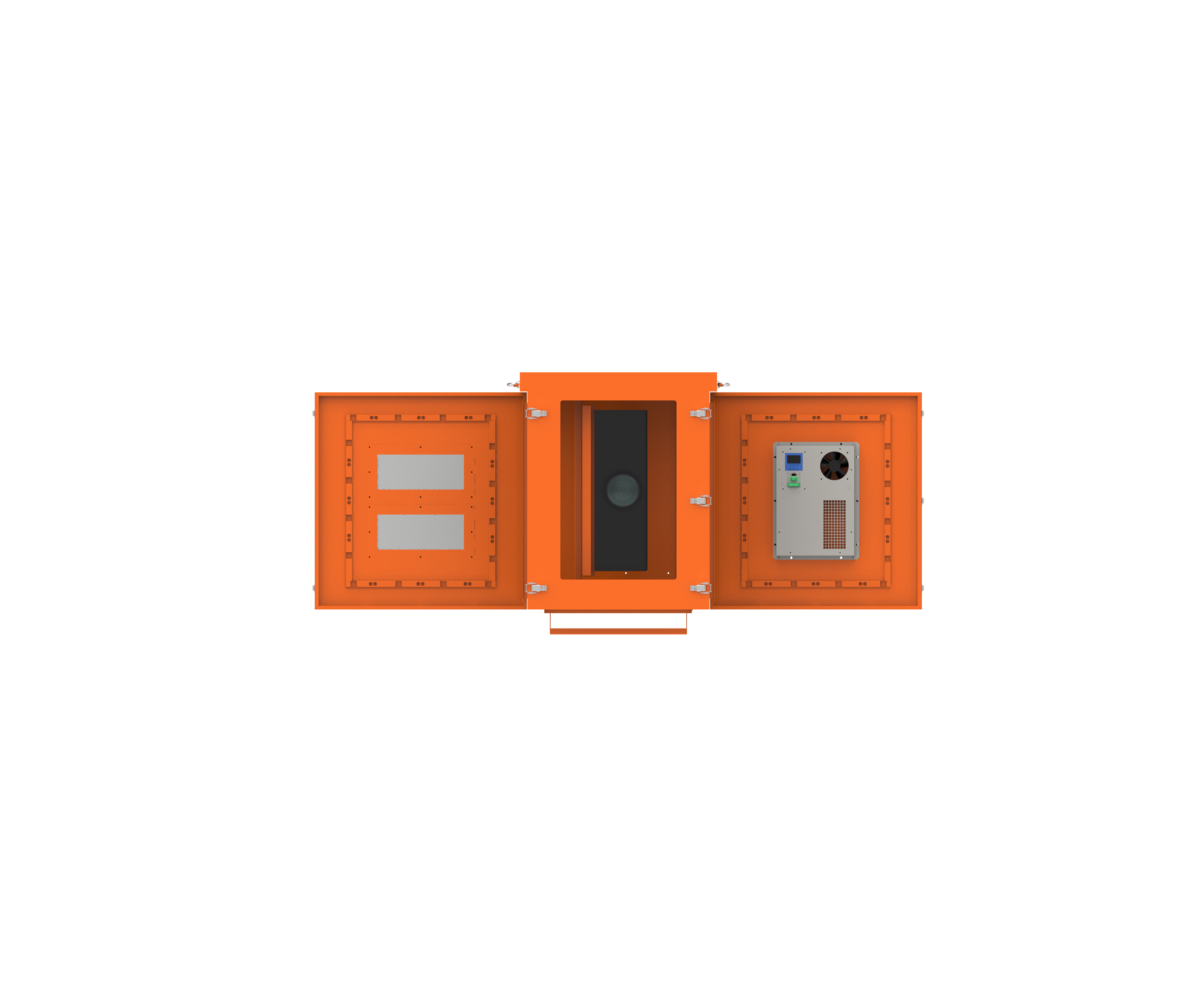
Selecting the correct moisture-proof box for your projector is one of the most critical decisions you will make when deploying projection equipment in demanding environments. Whether you are installing a projector outdoors, in a warehouse, on a factory floor, or in any location where humidity and condensation pose real risks, the enclosure you choose will directly determine how long your equipment survives and how reliably it performs. A moisture-proof box that is too small will restrict airflow and create heat buildup, while one that is oversized may fail to provide the snug, controlled internal environment your projector needs.
Getting the sizing right requires a methodical approach that considers not only the physical dimensions of the projector itself but also its thermal output, lens throw angle, mounting requirements, and the specific environmental conditions of the installation site. This guide walks you through every key factor so that your moisture-proof box selection becomes a confident, well-informed decision rather than a costly guessing game. Understanding the principles behind proper sizing will save you from premature equipment failure, warranty voids, and expensive reinstallation projects down the line.
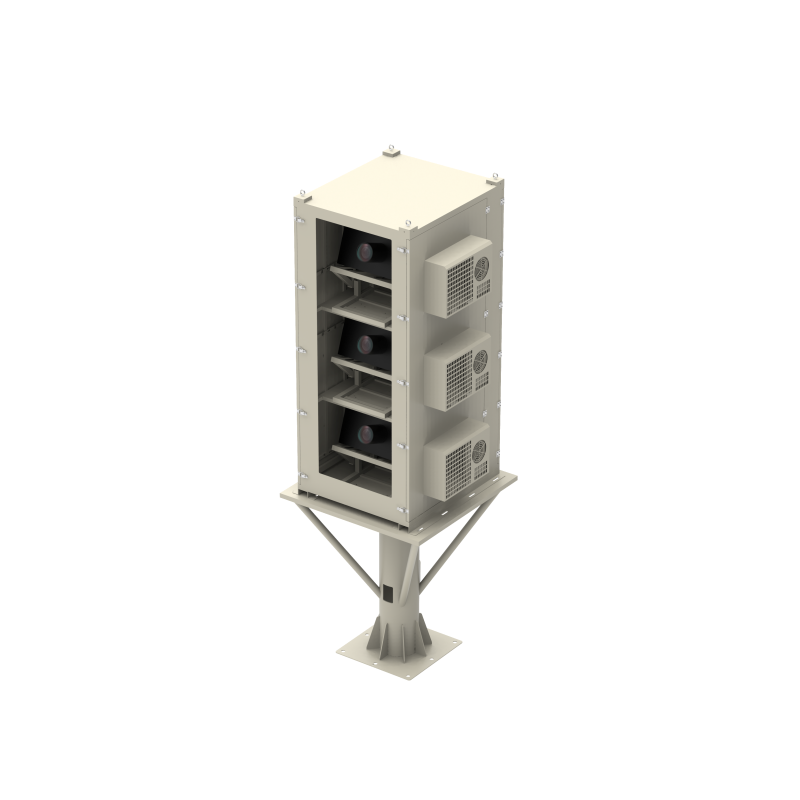
Understanding What a Moisture-Proof Box Actually Does
Core Protection Functions
A moisture-proof box is an engineered enclosure designed to shield sensitive electronic equipment — particularly projectors — from the damaging effects of humidity, condensation, dust, and airborne contaminants. It achieves this through a sealed or gasketed housing that meets specific ingress protection ratings, most commonly IP65 or higher, which certifies protection against water jets and fine dust particles. The enclosure creates a controlled microenvironment around the projector, preventing moisture from reaching the optical engine, lamp assembly, and internal electronics.
Beyond moisture exclusion, a well-designed moisture-proof box also manages internal temperature. Most quality enclosures incorporate ventilation systems, internal fans, or heat exchange mechanisms that allow the projector to run within its safe thermal range while still maintaining a sealed barrier against external humidity. This dual function — protection and thermal management — is why size selection matters so deeply. The wrong internal volume upsets the balance between protection and cooling performance.
It is also worth recognizing that a moisture-proof box is not simply a passive shell. In industrial and outdoor applications, the enclosure acts as the primary interface between the projector and its hostile surroundings. Without a properly sized and properly sealed moisture-proof box, even the most expensive projector will degrade rapidly in high-humidity conditions, leading to lens fogging, corrosion on circuit boards, and premature lamp failure.
Why Size Is a Functional Variable, Not Just a Physical One
Many buyers assume that sizing a moisture-proof box is purely about fitting the projector inside the enclosure. In reality, internal volume has a direct impact on airflow efficiency, heat dissipation rate, and condensation risk. An enclosure with too little clearance around the projector will trap heat close to the unit, causing thermal stress even if the enclosure has vents or fans. An oversized moisture-proof box, on the other hand, creates large pockets of trapped air that can develop condensation gradients, particularly when there are temperature swings between day and night.
The size of the moisture-proof box also determines how easily maintenance personnel can access the projector for lamp replacement, lens adjustments, or cable management. Enclosures that are sized just slightly too tight force technicians to remove the projector entirely for every servicing task, increasing both labor costs and the risk of damage during handling. Adequate internal clearance — typically at least 50 to 80 millimeters on each side — is a practical standard that experienced installers recommend.
Measuring Your Projector Correctly Before Sizing
Taking Accurate Physical Dimensions
The first concrete step in selecting a moisture-proof box is taking precise measurements of your projector unit. You need the full external dimensions — length, width, and height — including any protruding elements such as lens barrels, ventilation grilles, cable ports, and control panel interfaces. Many projectors have a lens that extends beyond the front face of the body, and this protrusion must be included in your length measurement or the moisture-proof box will not close properly or the lens will be obstructed.
Always measure with cables attached or at least account for the radius of bend that your power and signal cables will require inside the enclosure. Cables that are forced into tight bends near connectors are a common cause of intermittent faults in projector installations. The moisture-proof box you choose must have sufficient internal depth and side clearance to accommodate cable routing in a natural, stress-free configuration. Document all measurements carefully before making any purchasing decisions.
It is also advisable to check the projector manufacturer's datasheet for recommended clearance specifications. Some projectors require a minimum free space around their intake and exhaust vents to maintain proper airflow. These manufacturer-specified clearances become your baseline internal size requirement before you add any additional working space for maintenance access or cable management.
Accounting for Mounting Hardware and Accessories
A projector rarely sits bare inside a moisture-proof box. In most professional installations, it is mounted on an internal bracket, ceiling mount, or adjustable rail system. Each of these mounting components adds to the effective footprint of the assembly inside the enclosure. You must measure the combined dimensions of the projector plus its mounting hardware when calculating the minimum internal dimensions of the moisture-proof box.
Lens shift accessories, filter holders, and signal processors are also commonly installed inside the same moisture-proof box as the projector. If your deployment includes any of these additional components, their combined volume must be factored into your sizing calculation. Trying to retrofit a moisture-proof box after the fact — when you realize additional components do not fit — is an expensive and time-consuming mistake that proper pre-planning eliminates entirely.
Some moisture-proof box models come with integrated mounting rails or adjustable internal frames that simplify the process of securing both the projector and its accessories. When evaluating enclosure options, verify that the internal mounting system is compatible with your projector brand and model, or that the enclosure provides enough flat internal surface area for custom bracket fabrication if needed.
Matching Enclosure Size to Environmental Conditions
Humidity Levels and Condensation Risk
The ambient humidity level at your installation site directly influences how aggressively you need to seal the moisture-proof box and what internal volume is appropriate. In extremely humid environments — such as coastal locations, tropical climates, or indoor spaces with steam or water spray — a tighter internal volume with active dehumidification or desiccant integration may be preferable. This is because smaller air volumes are easier to keep dry than large chambers, especially when relying on passive desiccant packs.
If your moisture-proof box will be exposed to significant temperature swings between day and night, or between operational and non-operational periods, condensation becomes an acute risk. When warm, moist air cools inside a sealed enclosure, it deposits water on the coldest internal surfaces — which are often the optical elements of the projector. Selecting a moisture-proof box with appropriate internal volume and an effective sealing system rated for your specific humidity range is essential for preventing this scenario.
In moderately humid environments such as climate-controlled warehouses or commercial buildings, a standard IP65-rated moisture-proof box with passive ventilation is typically sufficient. However, in outdoor environments or industrial settings with chemical vapors, a higher-rated moisture-proof box with enhanced gasketing and corrosion-resistant construction may be required regardless of the projector's size.
Thermal Load and Ventilation Volume
Projectors generate significant heat during operation, and the moisture-proof box must be sized to manage this thermal load without allowing internal temperatures to exceed safe limits. As a general principle, the internal volume of the moisture-proof box should be large enough to prevent heat from concentrating around the projector's exhaust vents. Forced-air ventilation systems — either integrated into the enclosure or provided by the projector's own fans — require clear, unobstructed airflow paths that depend directly on internal spatial layout.
When evaluating thermal performance, consider the projector's wattage and its stated operating temperature range. High-brightness projectors above 5,000 lumens typically generate more heat than compact business projectors, and their moisture-proof box must be sized accordingly to maintain adequate thermal clearance. Many professional enclosure manufacturers publish thermal capacity specifications for their moisture-proof box models, expressed as maximum heat dissipation in watts, which you can compare directly against your projector's power consumption.
In hot climates or high-ambient-temperature installations, you may need to select a moisture-proof box that is one size larger than the physical projector dimensions alone would suggest, specifically to improve internal airflow and reduce thermal density. Some enclosure designs also integrate heat exchange panels or thermoelectric cooling elements for installations where both moisture protection and active cooling are simultaneously required.
Practical Sizing Guidelines and Selection Criteria
Calculating Minimum Internal Dimensions
A reliable starting formula for sizing a moisture-proof box is to add a minimum of 80 millimeters to each physical dimension of the projector assembly (including its mounting hardware). This gives you a working clearance that supports proper airflow, cable routing, and basic maintenance access. For projectors with high thermal output or for installations in extreme humidity, increase this clearance to 100 to 120 millimeters on the sides and rear, with at least 150 millimeters of clearance in front of the lens to avoid any interference with the projected image.
Once you have your minimum internal dimensions, compare them against the internal dimensions — not the external dimensions — of the moisture-proof box models you are evaluating. Enclosure wall thickness can be significant, particularly in heavy-duty industrial models, and the external size of the moisture-proof box may substantially exceed its usable internal volume. Always verify internal dimensions from the manufacturer's technical datasheet before purchasing.
It is also good practice to leave a margin for future upgrades. If there is any possibility that you will replace the current projector with a larger model in the coming years, choosing a moisture-proof box that is slightly larger than your immediate needs saves you the cost of enclosure replacement when the upgrade occurs. The incremental cost of a slightly larger moisture-proof box is far smaller than the labor and hardware cost of a full reinstallation.
Evaluating Enclosure Models Against Your Requirements
When comparing moisture-proof box models, examine the ingress protection rating, internal dimensions, ventilation design, mounting system compatibility, and material construction in that order of priority. An enclosure that meets your dimensional requirements but offers only IP44 protection is inadequate for high-humidity outdoor use, regardless of how well it fits your projector. Prioritize protection rating and then work down through the other criteria.
Look for moisture-proof box designs that include optical-quality front windows or lens ports that maintain IP ratings while allowing the projected image to pass through without distortion. The transparency and scratch resistance of the front window material — typically tempered glass or high-grade polycarbonate — should be evaluated alongside the enclosure's size and protection rating. A moisture-proof box with a substandard front window will degrade image quality even if it perfectly protects the projector from environmental damage.
Finally, consider the long-term serviceability of the moisture-proof box. Enclosures with tool-free access panels, replaceable gaskets, and modular internal mounting systems are significantly easier and cheaper to maintain over a multi-year deployment than fully welded or bolted-shut designs. The total cost of ownership of a moisture-proof box includes not just the purchase price but all the maintenance and labor costs that accrue over the operational life of the installation.
FAQ
What is the most important measurement when sizing a moisture-proof box for a projector?
The most important measurement is the full external envelope of the projector assembly including its mounting hardware, lens protrusion, and required manufacturer airflow clearances. These combined dimensions form the minimum baseline for calculating the internal volume the moisture-proof box must provide. Always add at least 80 millimeters of working clearance to each dimension on top of this baseline to support airflow, cable routing, and maintenance access.
Can I use a moisture-proof box that is larger than my projector to allow room for future upgrades?
Yes, selecting a moisture-proof box that is moderately larger than your current projector is a practical and cost-effective strategy. However, be cautious about choosing an excessively large enclosure, as very large internal air volumes can create condensation gradients and are harder to keep dry with passive desiccants. A moisture-proof box that is one standard size larger than your immediate needs strikes a good balance between flexibility and environmental control performance.
Does the projector's brightness level affect what size moisture-proof box I need?
Yes, projector brightness is closely correlated with thermal output, which directly impacts the internal volume and ventilation design required. High-brightness projectors above 5,000 lumens generate substantially more heat than lower-output models and require a moisture-proof box with greater internal clearance and more robust ventilation to maintain safe operating temperatures. Always cross-reference the projector's wattage against the enclosure manufacturer's thermal capacity specifications when selecting a moisture-proof box for high-brightness deployments.
What IP rating should a moisture-proof box have for outdoor projector installations?
For outdoor projector installations, a minimum IP65 rating is the widely accepted industry standard. IP65 certification confirms that the moisture-proof box is fully protected against dust ingress and capable of withstanding sustained water jets from any direction. In more severe environments — such as coastal locations with salt spray or industrial sites with chemical exposure — an IP66 or IP67 rated moisture-proof box may be warranted to ensure reliable long-term protection of the projector equipment.
Table of Contents
- Understanding What a Moisture-Proof Box Actually Does
- Measuring Your Projector Correctly Before Sizing
- Matching Enclosure Size to Environmental Conditions
- Practical Sizing Guidelines and Selection Criteria
-
FAQ
- What is the most important measurement when sizing a moisture-proof box for a projector?
- Can I use a moisture-proof box that is larger than my projector to allow room for future upgrades?
- Does the projector's brightness level affect what size moisture-proof box I need?
- What IP rating should a moisture-proof box have for outdoor projector installations?